
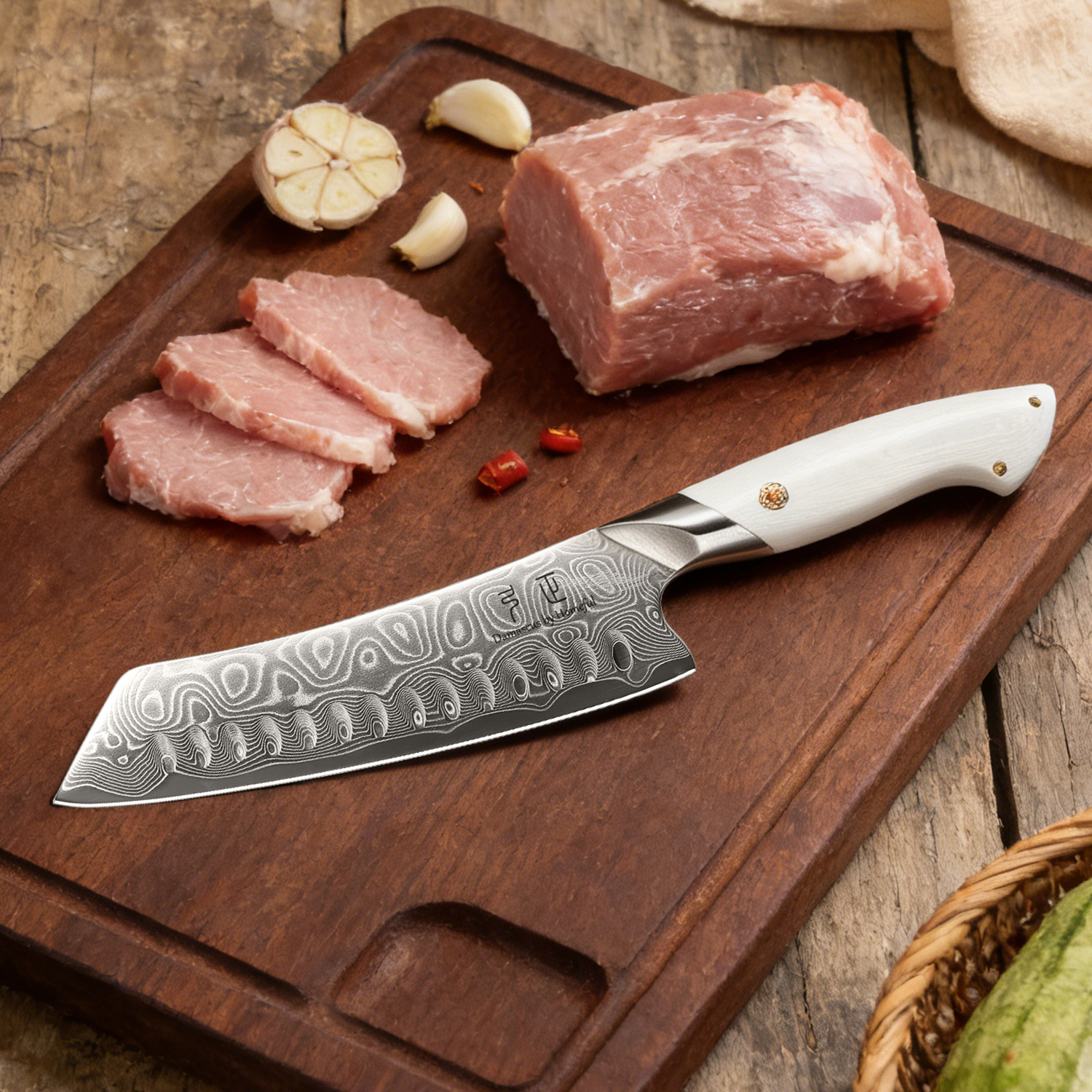
**Why Choose a Damascus Kitchen Knife: Benefits, Care, and Buying Tips**
If you’re passionate about cooking or seeking to upgrade your kitchen essentials, a Damascus kitchen knife could be your perfect choice. Renowned for their striking patterns, exceptional performance, and legendary durability, Damascus steel knives bring both beauty and utility to any culinary setting. In this comprehensive guide, you’ll learn why a Damascus kitchen knife stands out, how to care for it, and tips for choosing the right one for your kitchen.
---
## What is a Damascus Kitchen Knife?
### History and Origins of Damascus Steel
Damascus steel has roots that trace back to ancient swordsmiths in the Middle East, particularly around modern-day Syria. These craftsmen forged blades with unique wavy patterns that were not just decorative but also a testament to the steel’s strength. The mysterious technique, lost sometime in the 18th century, has been revived by modern metallurgists who’ve recreated Damascus steel—specifically for culinary tools like kitchen knives.
### How Damascus Steel is Made
Modern Damascus kitchen knives are crafted through a process known as pattern welding. This involves stacking layers of soft and hard steel, then heating, folding, and hammering them together multiple times. The result is a blade with hundreds or even thousands of micro-layers, creating those iconic swirling patterns.
### Unique Characteristics
The unique combination of metals and the repeated folding process equip Damascus knives with a blend of flexibility and rigidity, providing both resilience and a razor-sharp edge. Their visually stunning patterns turn every knife into a piece of functional art, making them highly prized by chefs and collectors alike.
---
## Benefits of Using a Damascus Kitchen Knife
### Superior Sharpness and Edge Retention
Damascus kitchen knives are celebrated for their sharpness. The high-carbon steels used in crafting these blades allow for an exceptionally fine edge, making slicing, dicing, and chopping nearly effortless. Moreover, the edge retention of a good Damascus knife surpasses that of many standard stainless steel knives, reducing the frequency of sharpening.
### Exceptional Strength and Durability
The forging process of Damascus knives produces a blade that can withstand tough kitchen tasks without easily chipping or breaking. The combination of hard and soft steels makes them less likely to fracture under stress, ensuring long-term use.
### Corrosion and Stain Resistance
The forging technique and choice of steel create a composite that often resists rust and staining better than standard knives. While not completely impervious, a Damascus kitchen knife is far more resilient with proper care.
### Enhanced Aesthetics
One of the most attractive aspects of a Damascus kitchen knife is its signature patterned blade. The intricate, flowing designs are each unique, representing the artistry and tradition behind every knife. Whether on display or in use, these knives are truly conversation starters.
### Versatility for Home Cooks and Professionals
Damascus kitchen knives aren’t just about looks; they’re functional tools suitable for home enthusiasts and professional chefs alike. Their sharpness and precision lend themselves to a wide variety of kitchen tasks—making them a versatile staple in any kitchen.
---
## How to Care for Your Damascus Kitchen Knife
### Cleaning Best Practices
To maintain your Damascus kitchen knife’s performance and appearance, always hand wash the blade with mild soap and warm water immediately after use. Avoid dishwashers, as harsh detergents and heat can corrode and dull the blade.
### Proper Drying and Storage
After washing, dry your knife thoroughly with a soft towel to prevent water spots or rust. Store your knife in a wooden knife block, magnetic strip, or securely in a sheath–never loose in a drawer, where edges can become damaged.
### Regular Honing and Sharpening
Keep your Damascus blade sharp by honing it regularly with a honing rod and sharpen as needed on a whetstone. Due to the steel’s hardness, a proper sharpening technique will maintain the edge for months, if not years.
### Preventing Rust and Stains
While these knives are resistant to staining, they’re not immune. To further protect your knife, occasionally apply a thin layer of food-grade mineral oil to the blade. This extra step is especially important in humid environments.
### Do’s and Don’ts for Longevity
- **Do**: Cut only on wooden or plastic boards.
- **Do Not**: Use the knife to chop through bones or frozen foods.
- **Do**: Rinse and dry the blade immediately after contact with acidic foods (e.g., lemons, tomatoes).
---
## Buying Tips: How to Choose the Right Damascus Kitchen Knife
### Key Features to Look For
A quality Damascus kitchen knife should have multiple, visible layers of steel—usually 67 or more. Full tang construction (the blade runs through the entire handle) provides optimal balance and strength. Pay attention to the handle material; wood, resin, and composite handles offer superior comfort and control.
### Recognizing Authentic vs. Fake Damascus
Unfortunately, not all knives marketed as "Damascus" are genuine. Authentic knives will have patterns that extend through the blade and not just on the surface. Ask for certification of materials or purchase from reputable dealers. Be wary of deals that seem too good to be true—they often are.
### Balance and Weight Considerations
Choose a knife that feels comfortable and balanced in your hand. The weight should suit your cooking style—some prefer a lighter blade for agility, while others value a slightly heavier knife for control.
### Reputable Brands and Manufacturers
Do your research on Damascus knife makers and read customer reviews. Well-known brands like Shun, Miyabi, DALSTRONG, and Yoshihiro offer authentic, high-quality Damascus kitchen knives with excellent customer service.
---
## Conclusion
A Damascus kitchen knife is much more than a beautiful tool for your kitchen—it’s a testament to ancient artistry, modern craftsmanship, and culinary excellence. With benefits ranging from unmatched sharpness and durability to unique aesthetics, these knives are a worthy investment for both home cooks and professional chefs. By following proper care techniques and understanding how to select the right blade, you’ll ensure your Damascus kitchen knife remains a reliable culinary companion for years.
Ready to elevate your cooking experience? Choose a Damascus kitchen knife and enjoy timeless performance and style. If you have any questions about Damascus knives or want to share your experience, drop a comment below—we'd love to hear from you!