
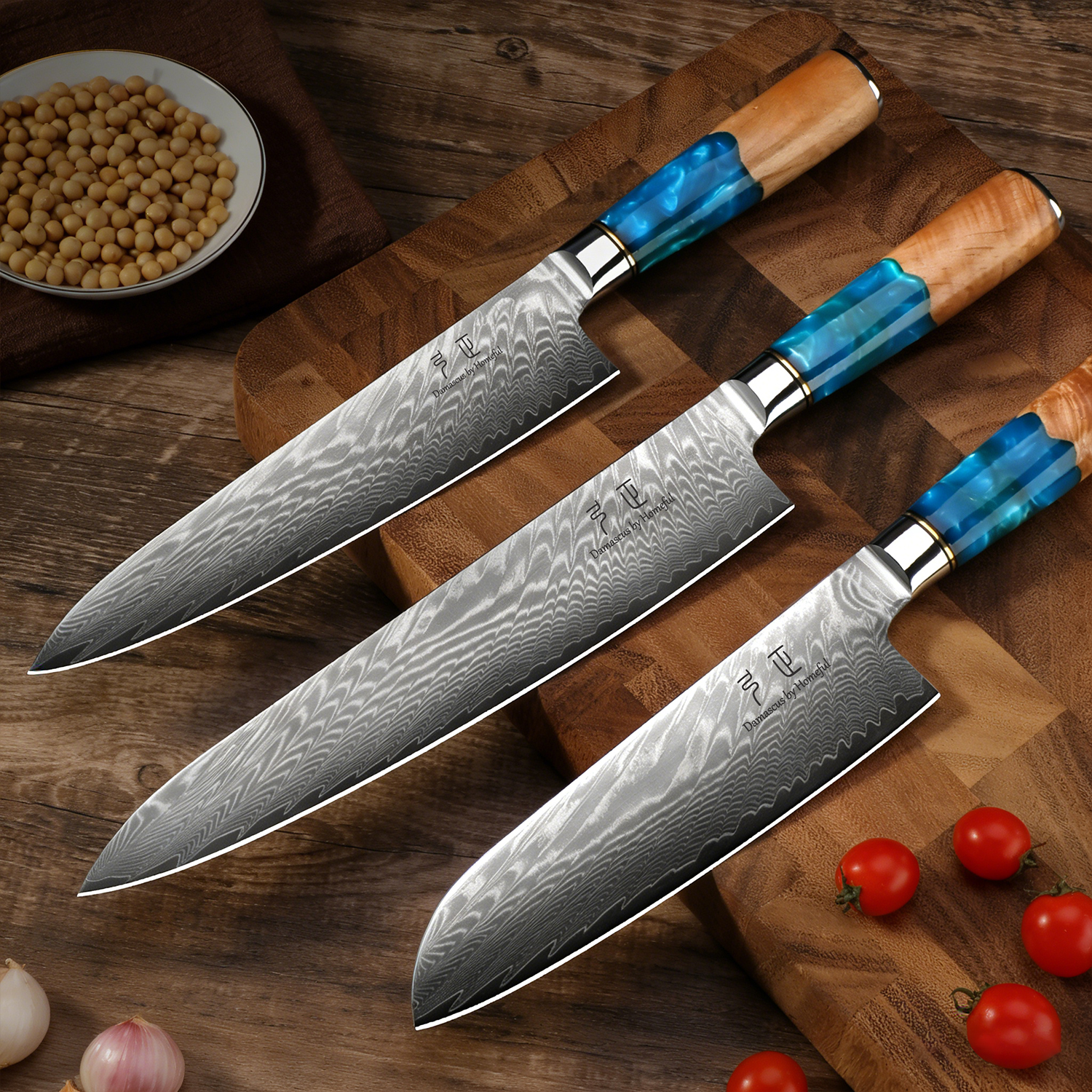
Damascus steel is one of the most recognized materials in the knife industry. Known for its distinctive flowing patterns and exceptional performance, Damascus steel has become a preferred choice for professional chefs, collectors, and cooking enthusiasts worldwide.
From premium chef knives to luxury steak knives, Damascus steel combines beauty, strength, and cutting precision in a way that few materials can match.
In this guide, we'll explore what Damascus steel is, how it is made, its advantages and disadvantages, and why modern Damascus knives continue to be highly sought after in kitchens around the world.
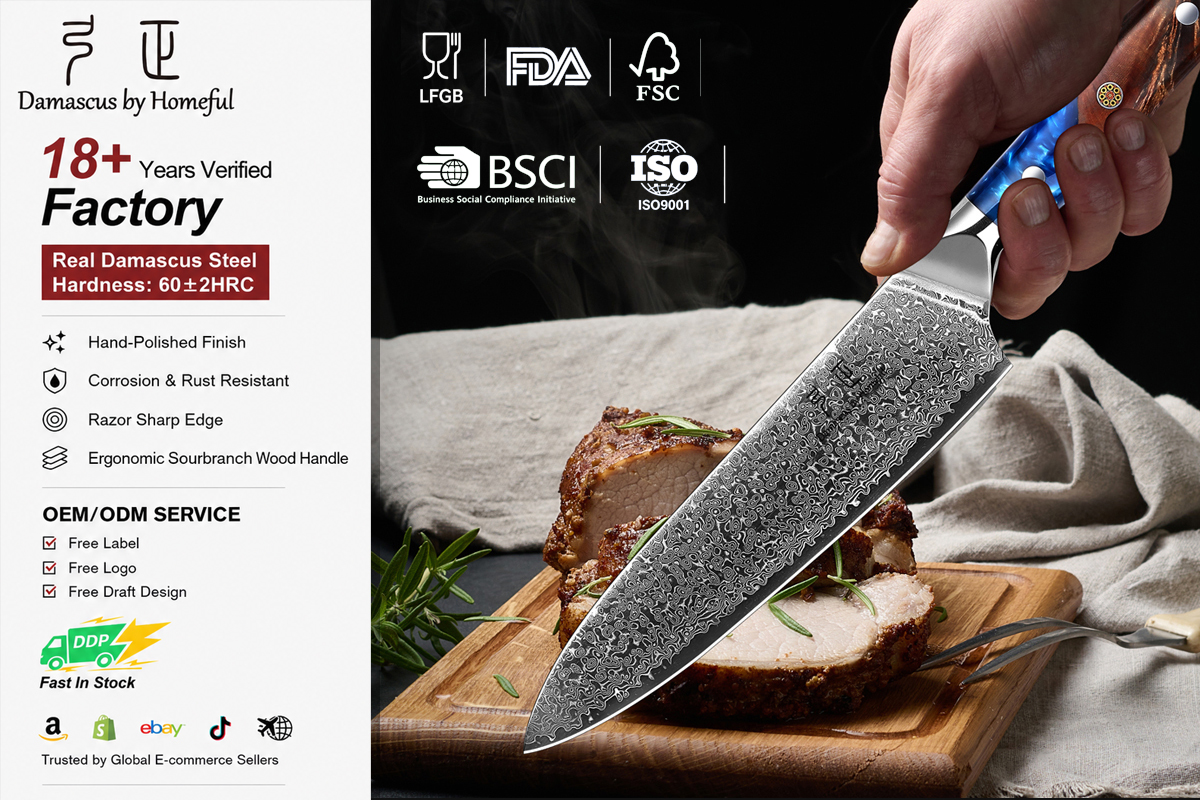
What Is Damascus Steel
Damascus steel refers to a type of layered steel created by forging multiple layers of metal together. The process produces a unique wave-like pattern across the blade surface while enhancing strength and durability.
Historically, Damascus steel originated from ancient sword-making techniques. Modern Damascus steel is manufactured using advanced forging technology that combines different steel layers to achieve both aesthetic appeal and cutting performance.
Today, Damascus steel is widely used in chef knives, santoku knives, utility knives, steak knives, and premium kitchen cutlery.
The History Of Damascus Steel
The origins of Damascus steel can be traced back over a thousand years to the Middle East. Ancient Damascus swords were famous for their remarkable toughness, sharpness, and distinctive patterns.
Legend suggests that Damascus blades were capable of cutting through armor while maintaining exceptional edge retention. Although the original manufacturing techniques were eventually lost, modern metallurgists have recreated similar layered steel structures using contemporary forging methods.
The name "Damascus" comes from the city of Damascus, a major trading center where these legendary blades were widely distributed.
How Modern Damascus Steel Is Made
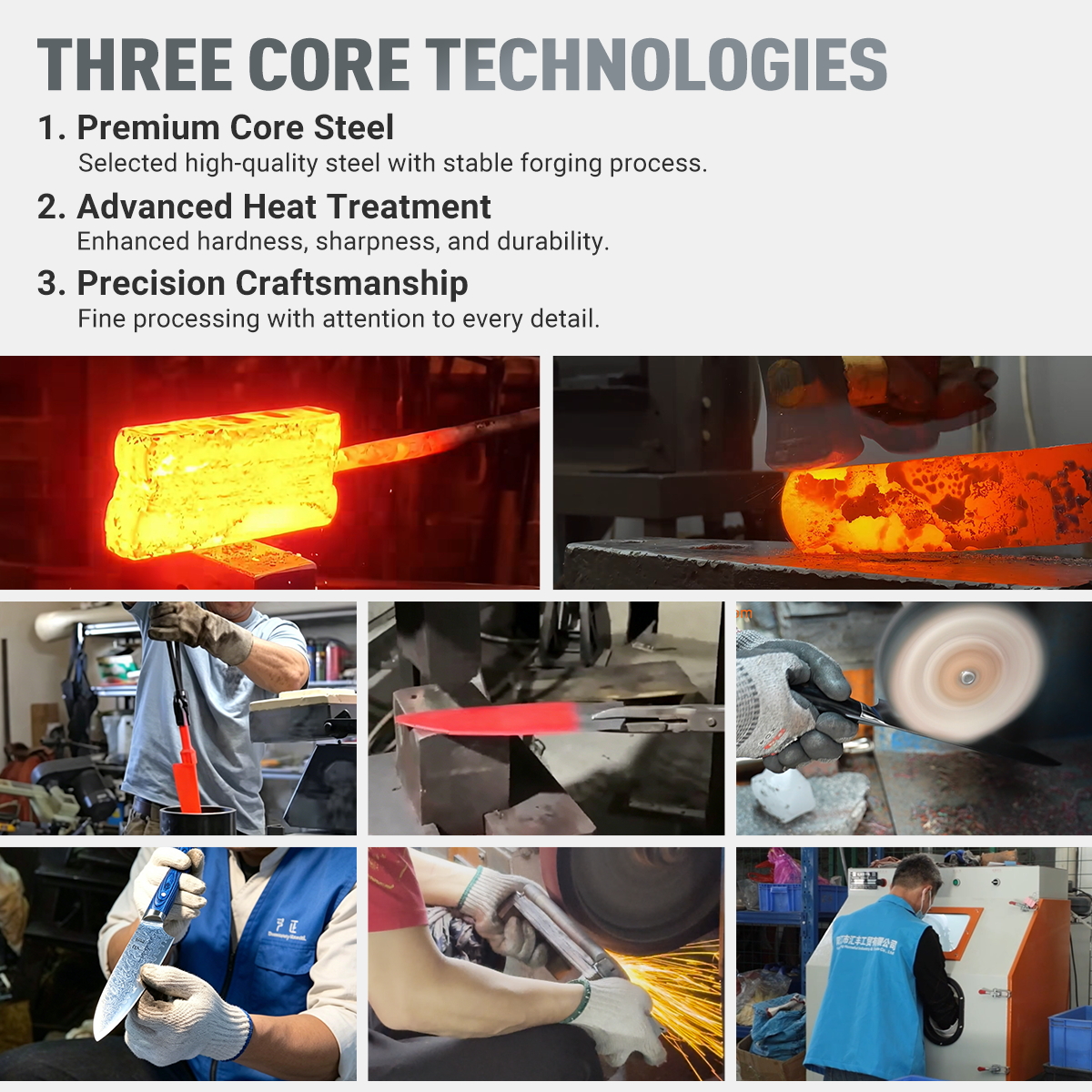
Selecting High Quality Core Steel
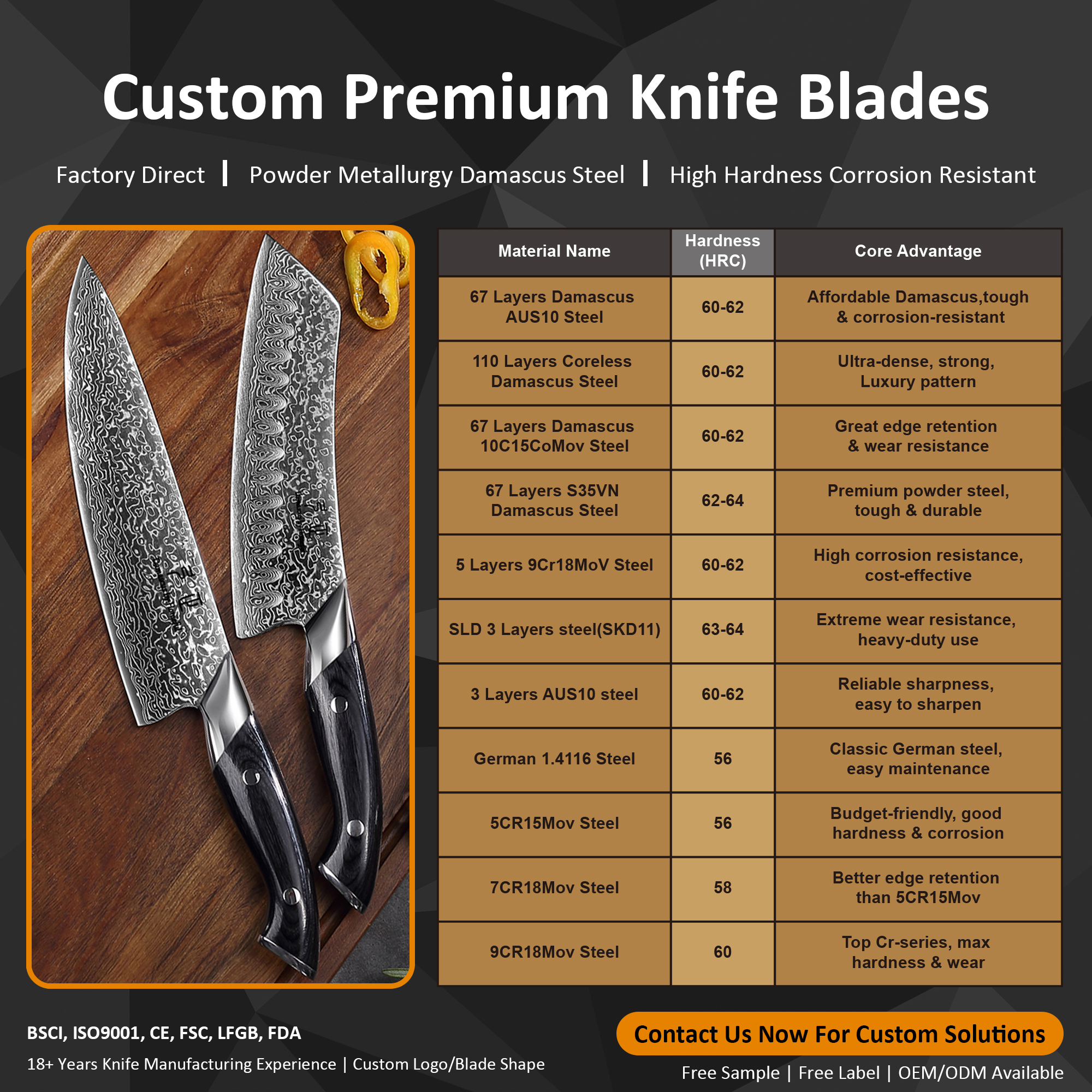
Layering Steel Sheets
Multiple steel sheets are stacked together to form a billet.
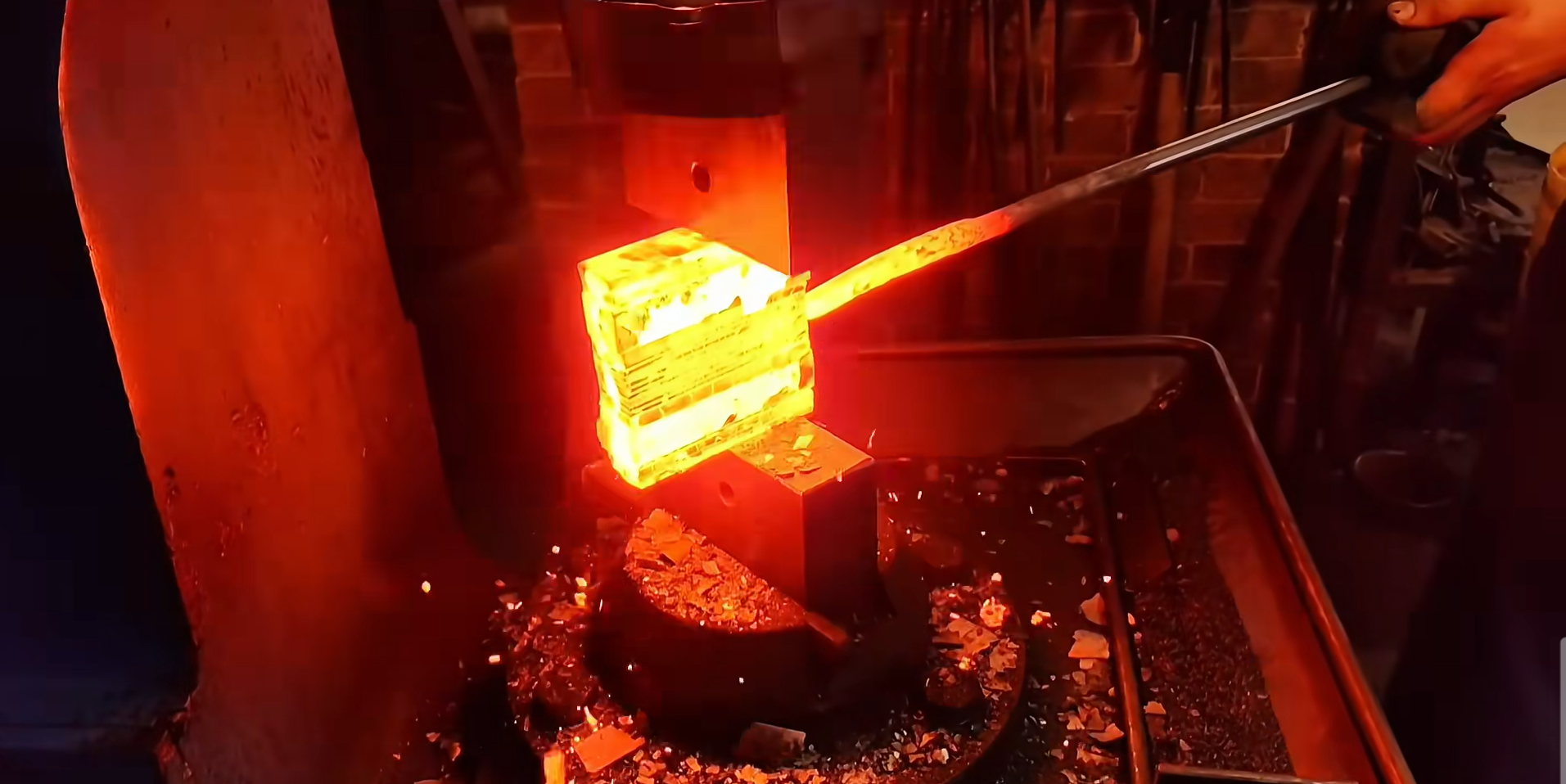
High Temperature Forging
The steel layers are heated and forged repeatedly.
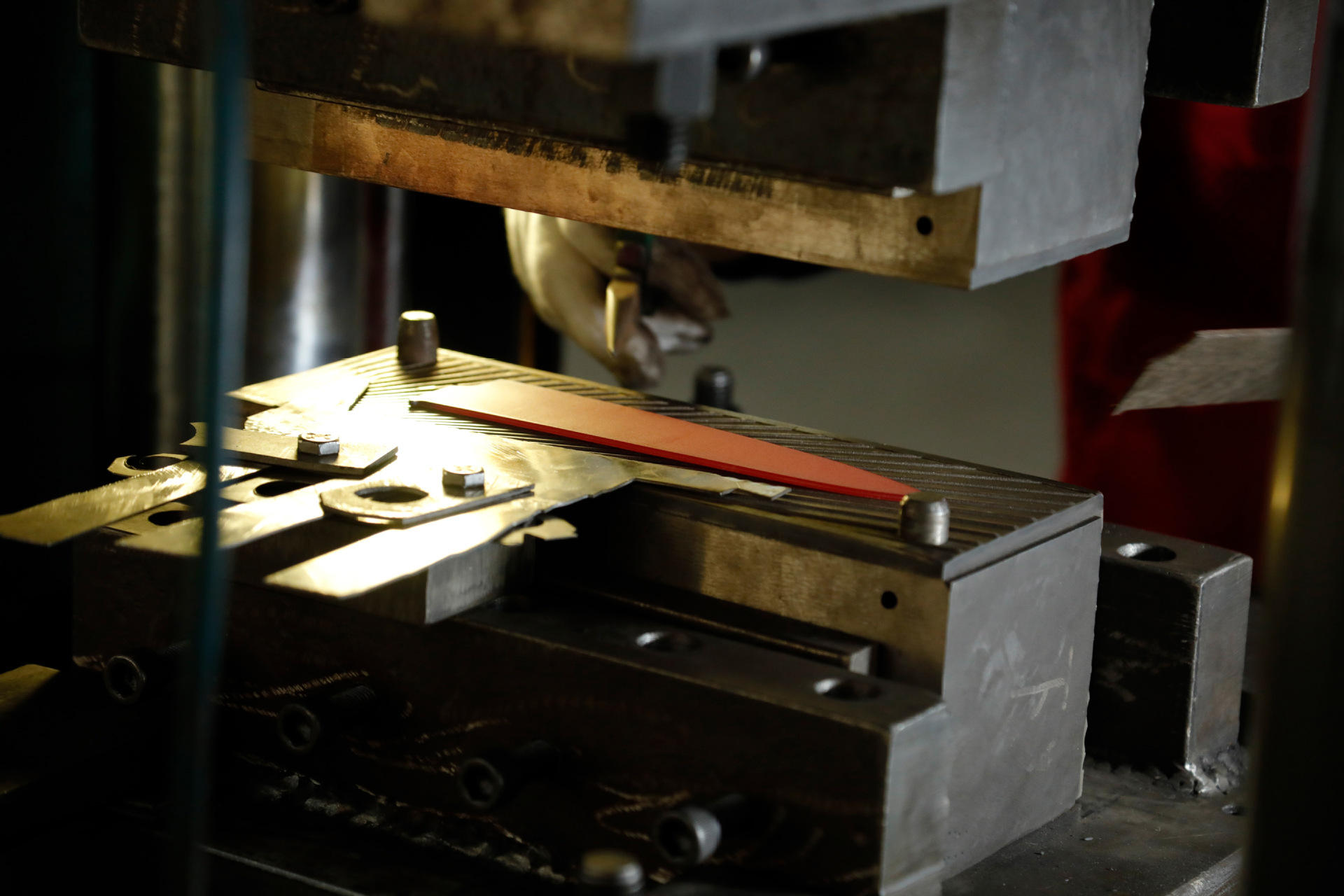
Folding And Pattern Formation
Distinctive wave patterns begin to appear.
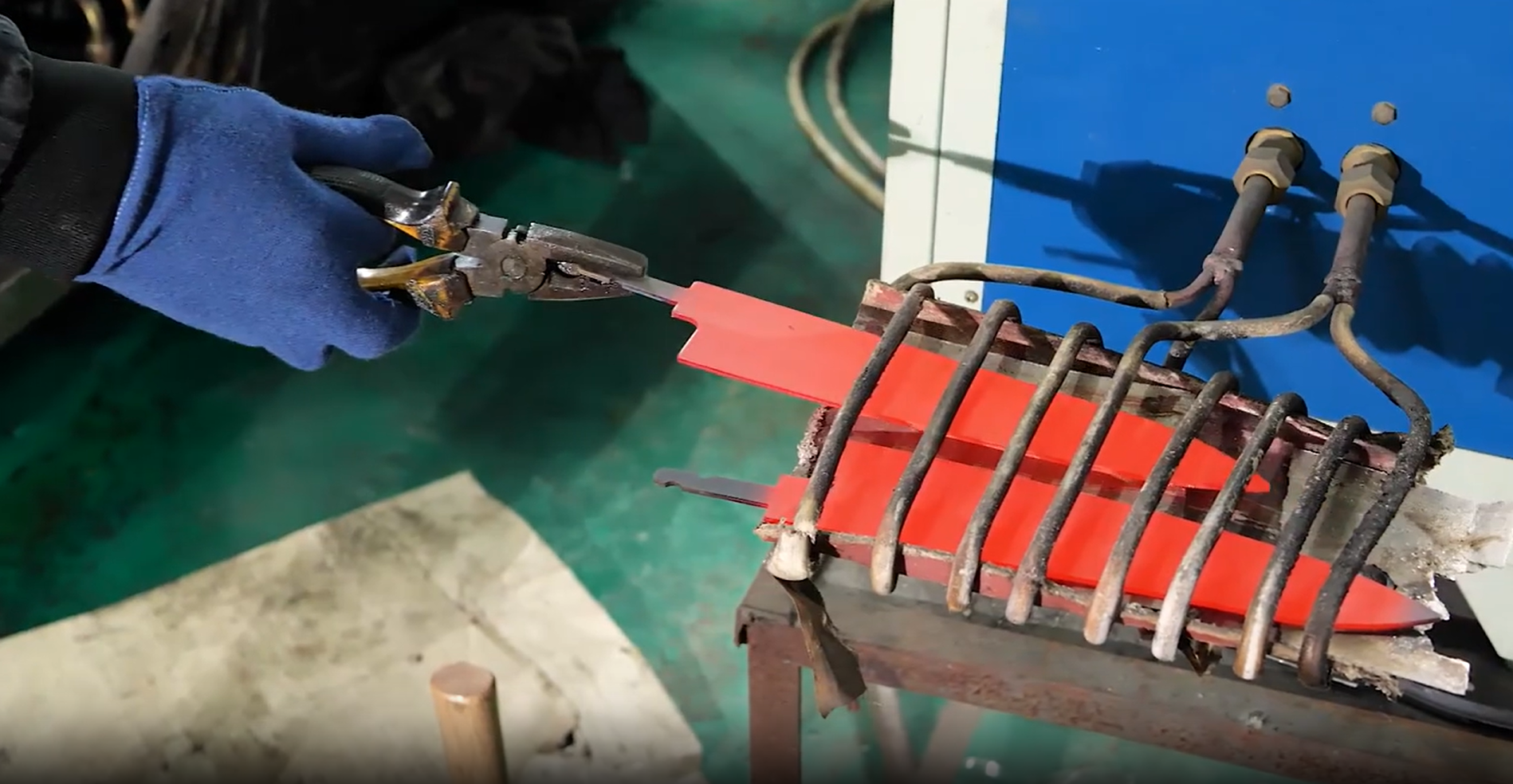
Heat Treatment
Optimizes hardness and edge retention.
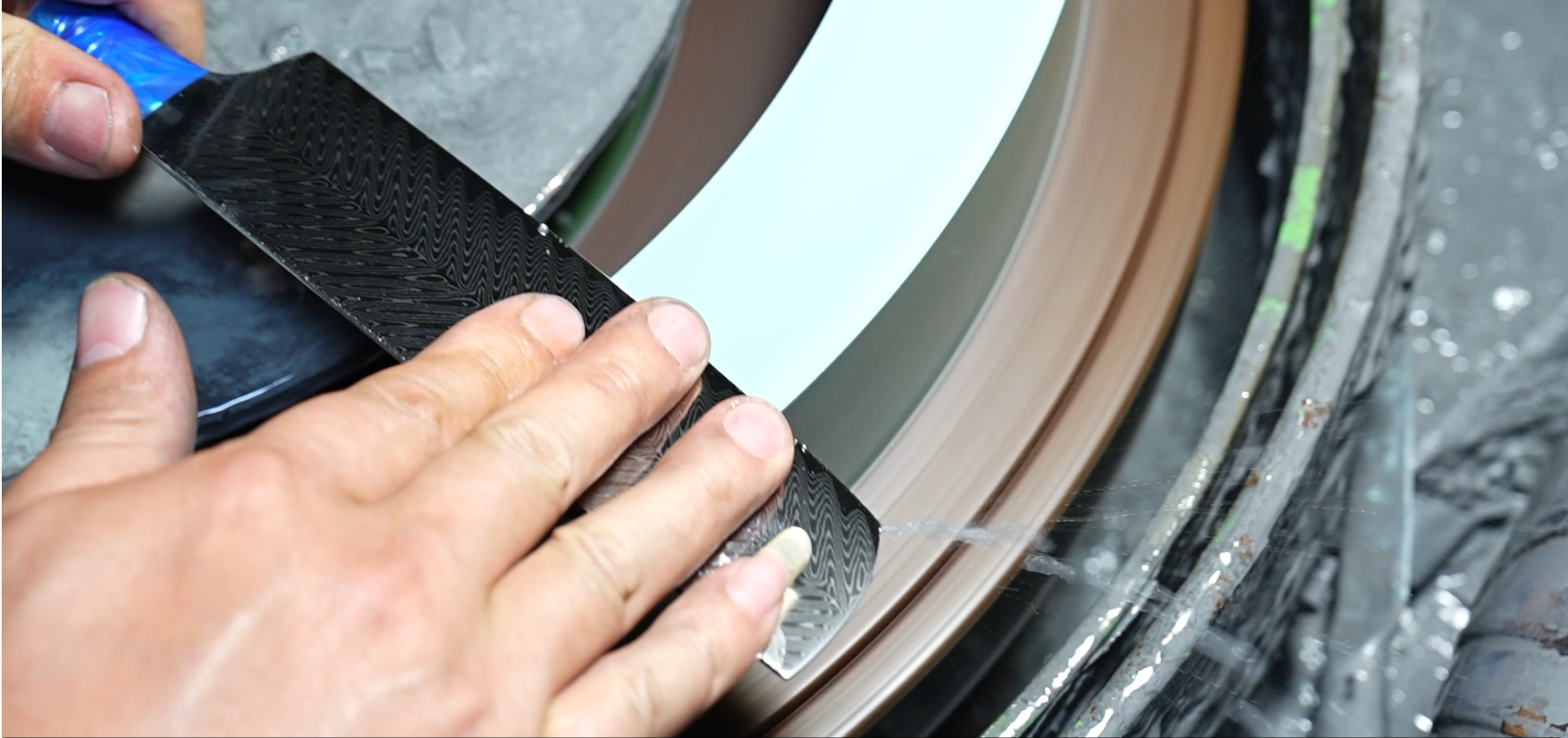
Grinding And Polishing
Final blade shaping and surface finishing.
Why Does Damascus Steel Have Unique Patterns
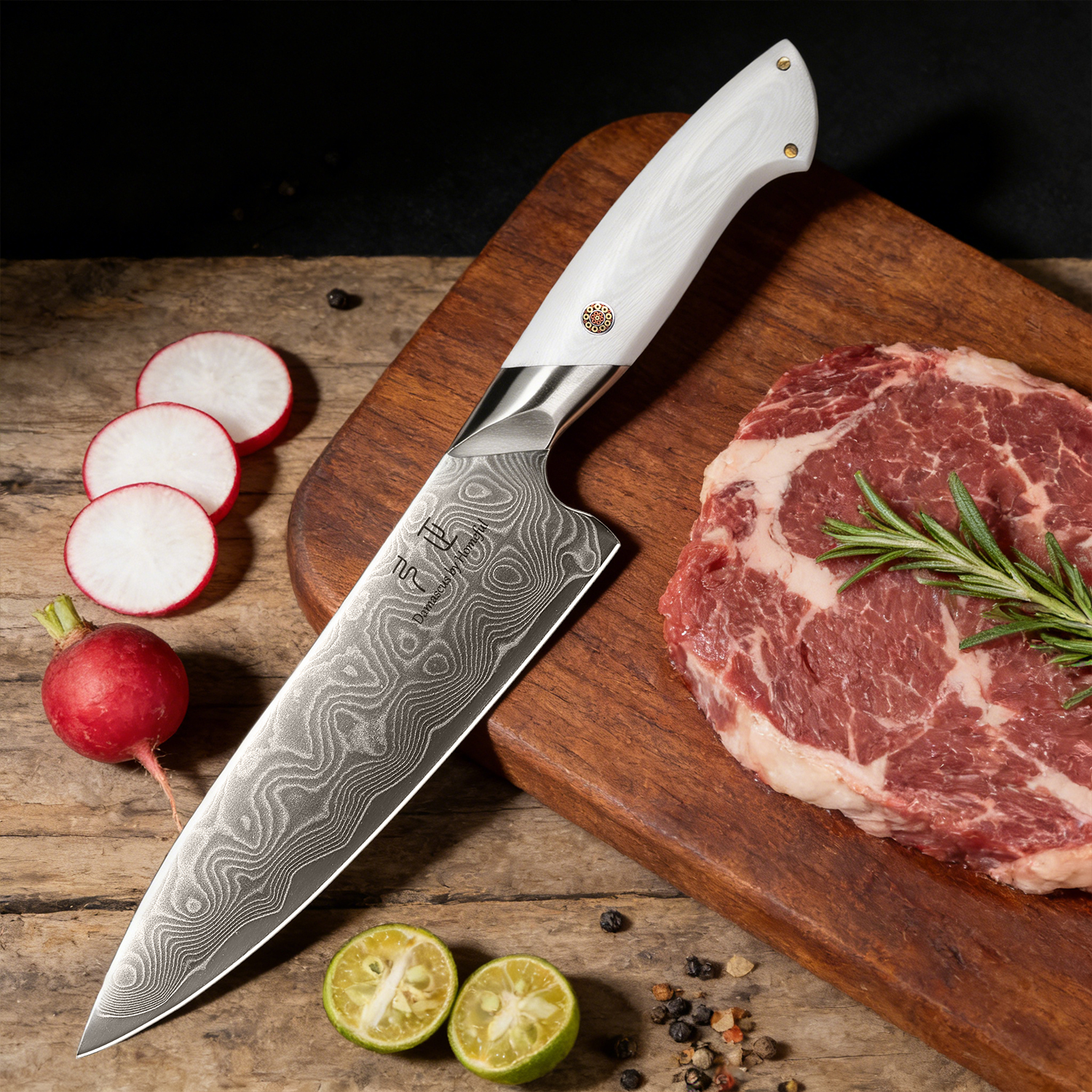
The famous Damascus pattern is created by combining different steel layers with varying chemical compositions. During the acid-etching process, each layer reacts differently, revealing the characteristic flowing lines seen on the blade surface.
No two Damascus blades display exactly the same pattern, making every knife visually unique.
.jpg?w=2000&h=2000)
Advantages Of Damascus Steel
.jpg?w=1200&h=1200)
Exceptional Sharpness
High-quality core steels such as VG10 provide razor-sharp cutting performance.
Excellent Edge Retention
Damascus knives maintain their sharp edge longer than many conventional kitchen knives.
Superior Durability
Layered construction improves blade strength and toughness.
Corrosion Resistance
Premium stainless Damascus steel offers excellent rust resistance.
Luxury Appearance
Each blade features a unique artistic pattern.
Are Damascus Knives Better Than Regular Stainless Steel Knives
| Feature | Damascus Steel | Standard Stainless Steel |
| Appearance | Excellent | Basic |
| Sharpness | Excellent | Good |
| Edge Retention | Excellent | Moderate |
| Durability | Excellent | Good |
| Premium Value | High | Low |
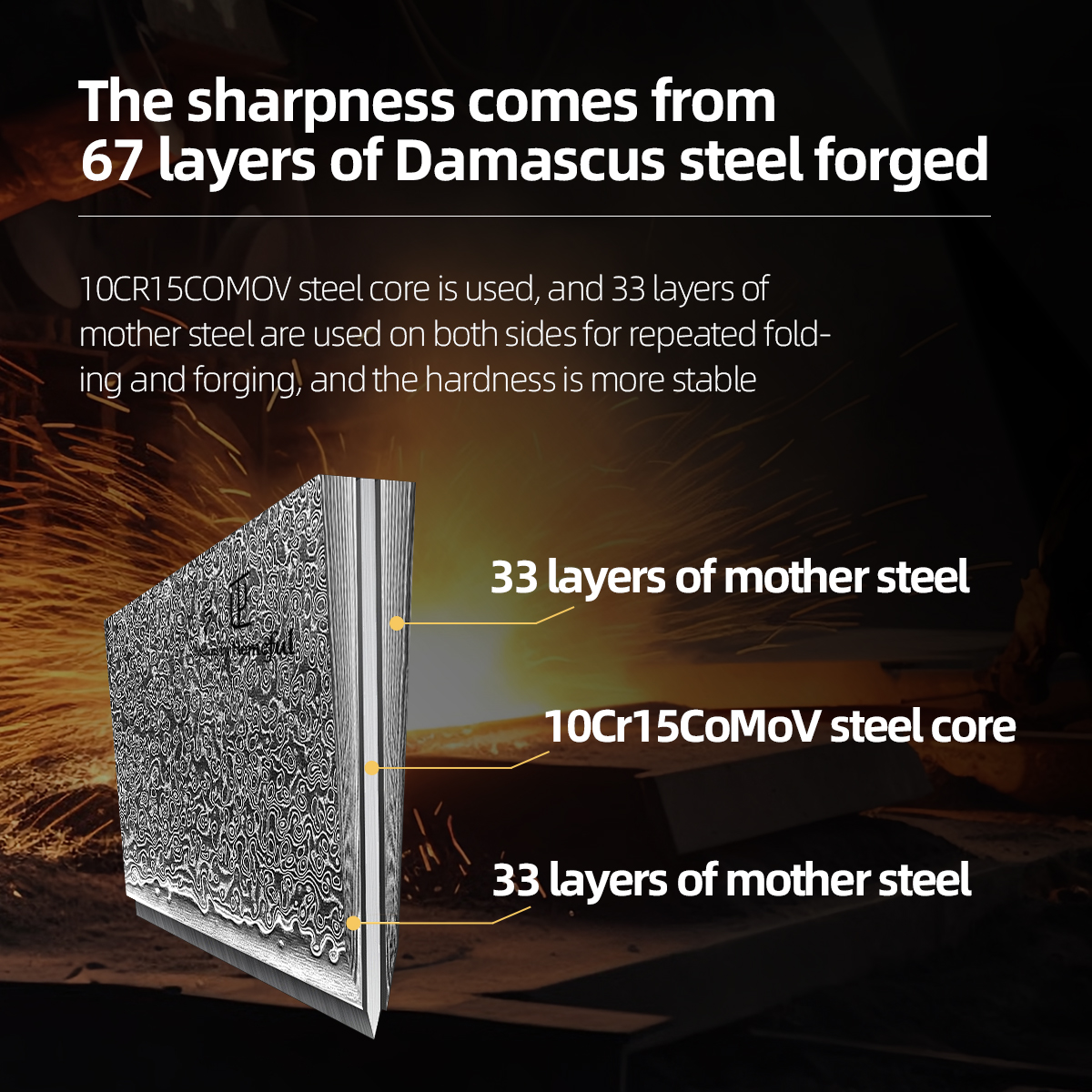
What Is 67 Layer Damascus Steel
A 67-layer Damascus knife typically consists of a hard steel core surrounded by multiple outer steel layers. For example, a VG10 core may be sandwiched between 33 layers of stainless steel on each side, creating a total of 67 layers.
This structure balances sharpness, durability, corrosion resistance, and visual appeal, making it one of the most popular configurations in modern kitchen knives.
How To Care For A Damascus Steel Knife
Hand Wash Only
Avoid dishwashers.
Dry Immediately
Prevent moisture exposure.
Use A Wooden Cutting Board
Protect the cutting edge.
Sharpen Regularly
Maintain peak performance.
Store Properly
Use a knife block or protective sheath.
Frequently Asked Questions
Is Damascus Steel Real Steel
Yes. Modern Damascus steel is produced through layered forging techniques.
Does Damascus Steel Rust
High-quality stainless Damascus steel is highly corrosion resistant but still requires proper care.
Is Damascus Steel Good For Kitchen Knives
Yes. It combines beauty, sharpness, durability, and edge retention.
Why Is Damascus Steel Expensive
The forging process requires additional craftsmanship and manufacturing steps.
Conclusion
Damascus steel remains one of the most admired materials in modern knife manufacturing. Its combination of strength, sharpness, durability, and distinctive patterns makes it a top choice for both professional chefs and home cooking enthusiasts.
Whether you're looking for a chef knife, santoku knife, or premium steak knife, a well-crafted Damascus steel blade delivers both outstanding performance and timeless visual appeal.
Cleaver Knife vs. Chef Knife: History, Top Uses, and Smart Buying Guide