
**What Is a Damascus Kitchen Knife? A Complete Beginner’s Guide**
**Abstract:**
Discover what a Damascus kitchen knife is, how it’s made, its benefits, and tips for beginners in this complete guide to Damascus steel knives.
---
## Introduction
Whether you’re a casual home cook or an aspiring chef, the kitchen knife is your most essential tool. But not all knives are created equal—some possess a captivating blend of beauty, precision, and history. One such standout is the **Damascus kitchen knife**. Famed for its mesmerizing patterns and exceptional performance, Damascus steel fascinates both culinary professionals and collectors alike.
Choosing the right kitchen knife transforms the cooking experience, impacting everything from ingredient prep to overall enjoyment. This guide will introduce you to the world of Damascus kitchen knives, unraveling what makes them special, how to distinguish genuine pieces, and how to care for these remarkable blades. If you’re new to Damascus knives, read on for everything you need to know!
---
## What Is a Damascus Kitchen Knife?
**A. Definition of Damascus Steel**
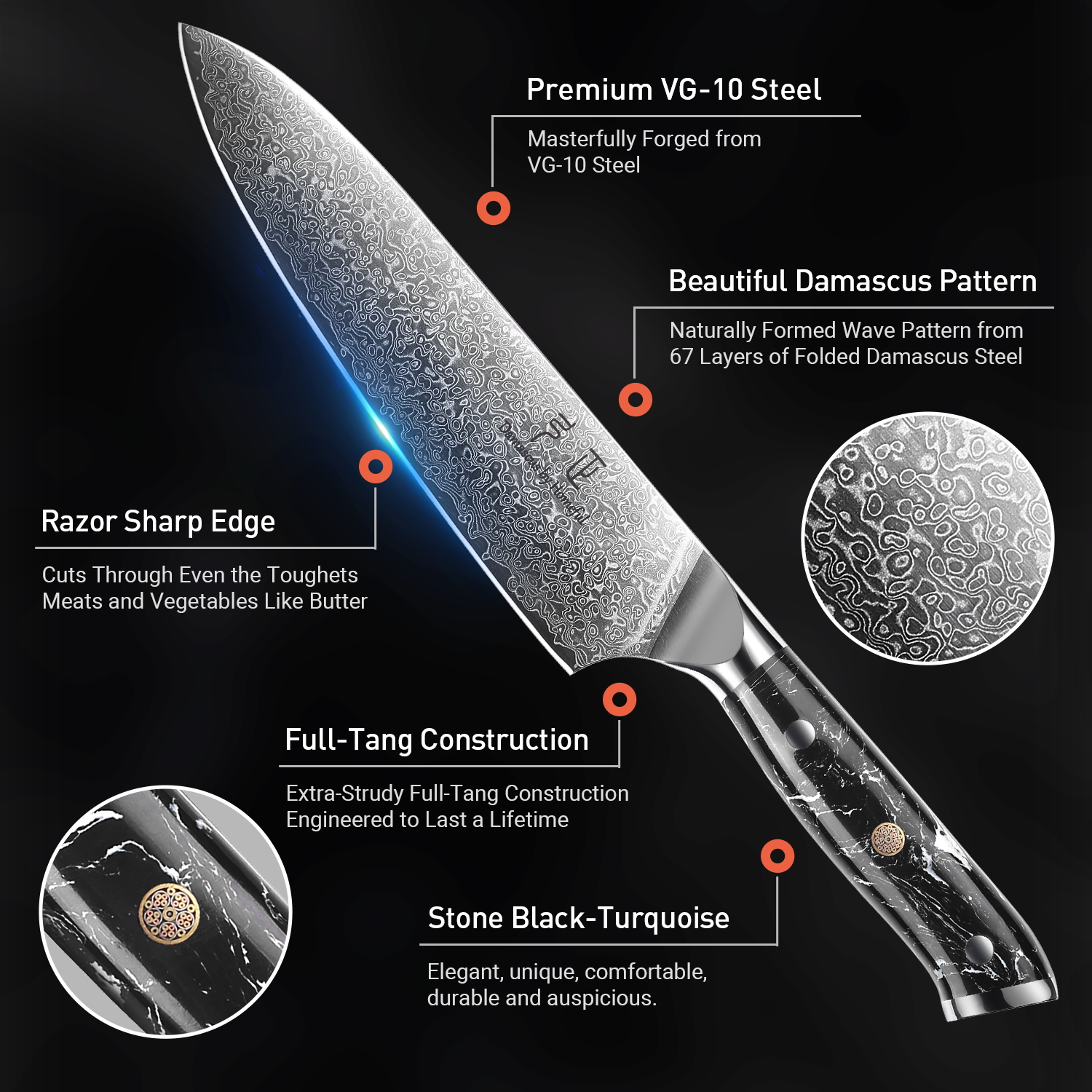
A Damascus kitchen knife is crafted from Damascus steel—a term referencing both a unique process of steelmaking and the resulting signature patterns. Modern Damascus steel typically consists of multiple layers of high- and low-carbon steels forge-welded together and then folded repeatedly.
**B. Historical Background and Origins**
This legendary steel gets its name from the trade city of Damascus, Syria, which, centuries ago, was central to the exchange of high-quality blades from the Indian subcontinent. The original method, dating back to around 300-400 AD, was known for its sharpness, resilience, and wavy surface patterns. Though the ancient secrets were lost, modern smiths have revived similar techniques.
**C. Key Characteristics That Set Damascus Knives Apart**
Damascus knives are instantly recognizable by their distinctive flowing patterns. Beyond mere appearance, they are lauded for their blend of toughness, sharpness, and unique craftsmanship—qualities highly valued in the kitchen.
---
## How Are Damascus Kitchen Knives Made?
**A. Traditional Forging Methods**
Traditional Damascus steel was made by forging together iron and steel, folding and hammering the metal to create fine layers. This process resulted in a blade with superior flexibility and a characteristic pattern.
**B. Modern Manufacturing Techniques**
Today, most Damascus kitchen knives employ pattern-welded steel—a process where sheets of different steels are layered, heated, and continuously folded. This replicates the look and many properties of ancient Damascus blades.
**C. Signature Patterns: Wavy, Watery, and Unique Blade Designs**
No two Damascus knives ever look the same. Their signature patterns can be wavy, watery, or even ladder-like, making them both highly functional and visually stunning.
**D. How the Layering Process Creates the Iconic Appearance**
The process of repeatedly folding the steel layers generates intricate patterns on the blade’s surface. Acid etching often highlights these layers, producing the striking, marbled look associated with Damascus steel.
---
## Unique Features and Benefits of Damascus Kitchen Knives
**A. Superior Edge Retention**
Damascus knives are famed for holding a keen edge longer than many standard kitchen knives, reducing the need for frequent sharpening.
**B. Exceptional Sharpness and Cutting Precision**
Thanks to their hard, layered steel core, authentic Damascus blades slice effortlessly through ingredients, making kitchen prep more efficient and precise.
**C. Rust and Corrosion Resistance**
Many Damascus knives incorporate high-carbon stainless steel layers, offering improved resistance to rust and corrosion—a major benefit in moist kitchen environments.
**D. Attractive Aesthetic Appeal**
The swirling, wavy patterns of Damascus steel aren’t just decorative—they serve as proof of skilled craftsmanship. Each knife is truly one-of-a-kind.
**E. Balance and Comfort in Handling**
Well-made Damascus kitchen knives feature excellent balance and ergonomic handles, providing comfort and control during prolonged use.
---
## Damascus Knives vs. Other Steel Knives
**A. Comparing Damascus to Stainless Steel and Carbon Steel Knives**
- **Stainless Steel Knives:** Highly resistant to rust, easy to maintain, but may not hold an edge as long as Damascus.
- **Carbon Steel Knives:** Extremely sharp and easy to sharpen, but more prone to rust.
- **Damascus Knives:** Combine the best features—sharpness, edge retention, and enhanced corrosion resistance—along with unique aesthetics.
**B. Pros and Cons of Damascus Knives**
**Pros:**
- Unrivaled visual appeal
- Excellent edge retention
- Strong and durable
- Smooth, precise cutting action
**Cons:**
- Typically more expensive
- Require proper care to prevent spotting or rust
- Must be wary of imitations
**C. When Should You Choose a Damascus Knife?**
Opt for a Damascus knife if you value a blend of function and form—ideal for passionate cooks, culinary students, or those wanting to enhance their kitchen collection.
---
## Popular Types of Damascus Kitchen Knives
1. **Chef’s Knife** – The versatile all-rounder for slicing, dicing, and chopping.
2. **Santoku Knife** – A Japanese all-purpose knife, perfect for vegetables, fish, and boneless meats.
3. **Paring Knife** – Best for peeling, trimming, and intricate work.
4. **Utility Knife** – Suitable for cutting sandwiches, fruits, and medium-sized items.
5. **Specialty Knives (Bread, Carving, etc.)** – Damascus steel can be applied to almost any style, providing beauty and performance across your toolkit.
---
## How to Identify Authentic Damascus Kitchen Knives
**A. Recognizing Genuine Blade Patterns**
Real Damascus knives display intricate, natural patterns that run through the blade, not just on the surface. Authentic designs continue even after sharpening.
**B. Tips to Avoid Fake or Imitation Damascus Knives**
- Beware of knives with printed or laser-etched “Damascus” patterns that disappear with use.
- Check for reputable sellers and clear details on the forging process and materials used.
**C. Trusted Brands and Manufacturers**
Seek established brands such as Shun, Yoshihiro, and Miyabi, or reputable artisan forges specializing in pattern-welded steel.
---
## Taking Care of Your Damascus Kitchen Knife
**A. Proper Cleaning and Drying**
- Handwash only—never put in the dishwasher.
- Dry promptly to avoid water spots or rust.
**B. Sharpening and Honing Techniques**
Use a whetstone or professional sharpening service. Avoid pull-through sharpeners, which may damage the layered steel.
**C. Safe Storage Methods**
Store in a knife block, magnetic strip, or blade guard to prevent accidental damage.
**D. Mistakes to Avoid for Long-Lasting Performance**
- Don’t use Damascus knives on frozen foods or bones.
- Avoid soaking or long-term exposure to water.
- Don’t neglect regular maintenance.
---
## Conclusion
Damascus kitchen knives offer a unique combination of history, performance, and artistry—making them a prized addition to any kitchen. Their sharpness, durability, and beauty set them apart from ordinary knives. For beginners ready to elevate their cooking and knife skills, investing in a genuine Damascus kitchen knife is a choice you won’t regret.
Ready to embrace the craft? Explore Damascus knives for yourself, and experience the pleasure of cooking with a tool that’s as inspiring as the dishes you create. Have an experience with Damascus kitchen knives or want to learn more? Share your thoughts and join the conversation below!