
**The Timeless Art of Damascus Knives: Exploring History, Beauty, and Craftsmanship**
Few objects have captivated artisans, collectors, and culinary enthusiasts quite like the Damascus knife. Revered for their elegant swirling patterns, unmatched sharpness, and legendary origins, Damascus knives represent the perfect fusion of utility and artistry. In this blog, we delve deep into the timeless allure of Damascus knives—unveiling their storied past, distinctive beauty, exceptional craftsmanship, and modern appeal. Whether you’re a chef, a collector, or simply intrigued by the world of fine blades, this exploration will enrich your appreciation for the enduring legacy of Damascus steel.
The Rich History of Damascus Knives
The Damascus knife is more than just a cutting tool; it is a symbol of history and human ingenuity. The origins of Damascus steel stretch back to ancient civilizations, believed to have first emerged in the Near East around 300 BC. The renowned city of Damascus, located in modern-day Syria, gave its name to this extraordinary steel. Legendary accounts describe Damascus blades as so sharp they could split a hair, and so tough they could cut through other swords.
Ancient forging methods relied on the combination of iron and steel, folded repeatedly to produce a blade with a unique wavy pattern. Some historical records suggest that Persian, Indian, and Arab blacksmiths played key roles in advancing these techniques. The secrets of forging authentic Damascus steel were closely guarded and eventually lost to history, making original Damascus blades exceedingly rare and highly prized.
Many famous battles and civilizations, from Alexander the Great’s conquests to medieval crusaders and samurai, prized Damascus blades for their durability and cutting prowess. This legacy continues to inspire modern blacksmiths and collectors alike.
The Distinctive Beauty of Damascus Steel
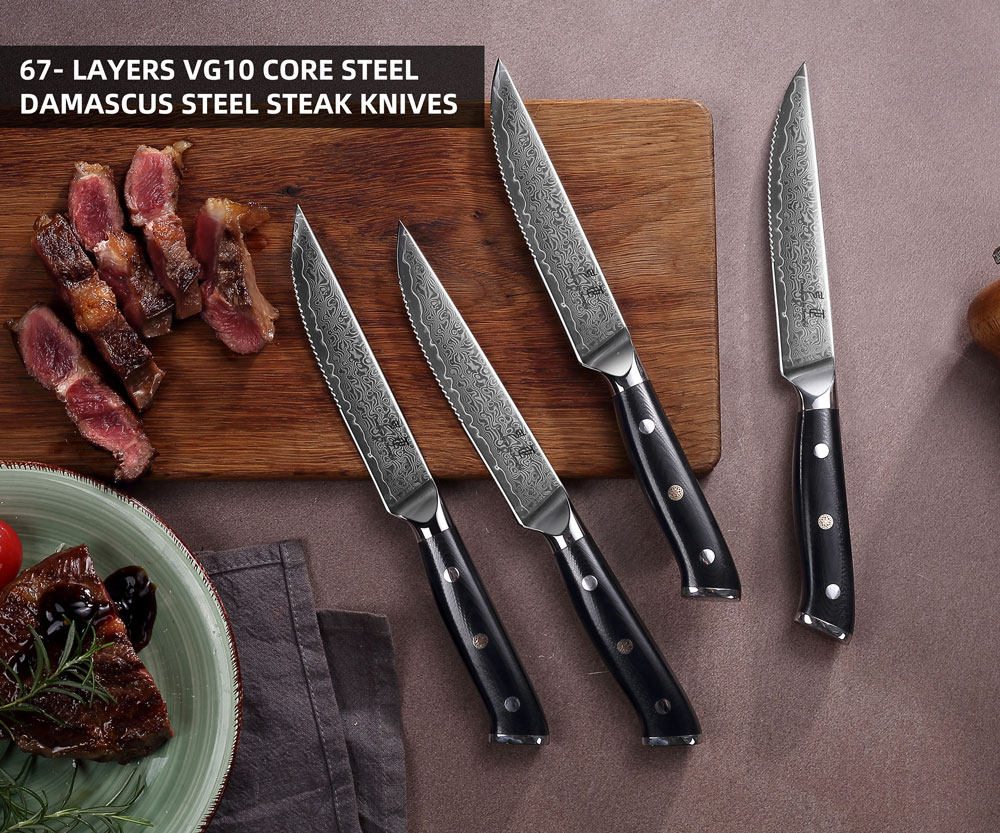
One of the most striking aspects of Damascus knives is their visual allure. The steel’s mesmerizing patterns—often described as watery, swirling, or feathery—are the result of the precise layering and folding of multiple steels. These patterns are not merely decorative; they reflect the blade’s composition and the blacksmith’s skill.
Various patterns, such as ladder, rose, or raindrop, make each Damascus knife uniquely beautiful. The interplay of light on the surface creates a dynamic aesthetic that distinguishes Damascus knives from ordinary blades.
Damascus knives also carry profound cultural significance. In many societies, the intricate patterns symbolize strength, endurance, and tradition. Collectors and chefs alike value these knives not only for their cutting performance but for their artistic merit, often viewing each piece as a functional work of art.
The Craftsmanship Behind Damascus Knives
Creating a genuine Damascus knife demands extraordinary skill and patience. Modern Damascus knives primarily use pattern-welded steel—layering high-carbon and low-carbon steels, then heating, hammering, and folding them repeatedly. This process yields a blade with the legendary patterns and enhanced edge retention.
Blacksmiths begin by preparing steel billets and stacking them. After heating, the stack is hammered, folded, and welded, repeating the process dozens of times. This meticulous layering produces the distinctive patterns and a blade that combines flexibility with astounding hardness.
Today, bladesmiths blend traditional methods with new technologies such as precision heat treatment and CNC machining. High-quality Damascus knives often bear these hallmarks:
- Intricate, consistent patterns across the blade.
- Uniform hardness and edge sharpness.
- Expertly forged tangs and handles, enhancing both beauty and function.
The artistry extends to handle materials—exotic woods, bone, and resin are often used, making each knife truly one-of-a-kind.
Damascus Knives in Modern Times
Damascus knives have evolved from ancient weaponry to become coveted tools and collectibles. While the forging techniques and uses have transformed, their essential appeal remains unchanged.
In the kitchen, Damascus chef knives are revered for their razor-sharp edges, durability, and aesthetic appeal. Many chefs claim the unique patterning helps reduce food sticking, enhancing both efficiency and visual presentation.
Outside the kitchen, Damascus knives are popular for hunting, outdoor activities, and as collector’s items. Custom blades often feature elaborate handle designs, inlays, and unique patterns tailored to individual tastes.
For those considering a purchase, it is essential to know how to identify authentic Damascus steel:
- Look for continuous patterns throughout the blade, not just surface etching.
- Seek reputable brands or artisan makers.
- Authentic blades tend to weigh more due to the dense layering process.
Proper care also prolongs longevity:
- Keep the blade dry and clean.
- Use mineral oil to prevent rust.
- Store in a protective sheath.
Why Damascus Knives Are Timeless
What makes Damascus knives truly timeless? It is a blend of their enduring practicality and their role as objects of desire. The versatility of Damascus blades—from slicing delicate sashimi to handling rugged outdoor tasks—ensures their value across generations.
In interviews, renowned chefs rave about their Damascus knives, praising their precision, edge retention, and the pride of using a handmade masterpiece. Collectors cite the thrill of owning a blade with a story—a living testament to centuries-old craftsmanship.
Modern artisans continue to push boundaries by experimenting with new metals and pattern techniques. Yet, at the heart of each Damascus knife lies a connection to tradition, beauty, and meticulous craftsmanship.
Conclusion
From ancient battles to modern kitchens, Damascus knives have earned their place as icons of strength, artistry, and innovation. Their unparalleled patterns, rich history, and exceptional performance make them the ultimate fusion of function and fashion. When you own a Damascus knife, you hold more than a blade—you hold a legacy, a piece of art, and a tool crafted with passion.
Whether you’re looking to expand your collection, enhance your culinary skills, or simply admire their beauty, Damascus knives offer a timeless appeal worth exploring. Discover the legend for yourself—seek out genuine craftsmanship, cherish the artistry, and be part of the enduring story of Damascus steel.