
The Fascinating History of Damascus Steel Knives in Modern Kitchen Cutlery
Damascus steel knives have piqued the curiosity of chefs, collectors, and history aficionados alike. Revered for their extraordinary patterns, incredible sharpness, and roots in ancient craftsmanship, these knives seamlessly blend centuries-old tradition with modern culinary innovation. In this article, we delve into the captivating history of Damascus steel, explore how it evolved into today’s kitchen cutlery, and answer why these knives still stand out in contemporary cooking.
Introduction
Damascus steel has long been associated with beauty, strength, and mystique. While chefs prize Damascus steel knives for their superior performance and striking patterns, few know the full story behind their origin and journey into modern kitchens. This blog uncovers the ancient roots, manufacturing secrets, and contemporary relevance of Damascus steel knives, guiding you through what makes them a cut above the rest.
Origins of Damascus Steel
The term ‘Damascus steel’ traces back to the city of Damascus in ancient Syria, where blades forged from this material first gained global renown as early as the 3rd century AD. These weapons were legendary for their razor-like sharpness, resilience, and intricate, swirling or wavy patterns that mimicked flowing water.
Historians speculate that the actual steel originated from India, specifically from ‘wootz’ steel ingots exported to the Middle East. Early blacksmiths shaped wootz steel into blades using secret forging techniques, resulting in what became widely known as Damascus steel. The unique attributes—durability and beautiful patterns—quickly made Damascus swords the prized possession of warriors and royalty alike.
Yet, as the true process faded into obscurity by the 18th century, the mystique around Damascus steel only deepened. Today, the term signifies not only the physical properties but also the artistry and legend behind this metal.
The Craftsmanship Behind Damascus Steel
Traditional Damascus steel was crafted using a labor-intensive combination of forging and folding. Blacksmiths would heat, hammer, and fold the steel repeatedly, which produced the signature “watered” appearance and a tougher blade. This technique, once shrouded in secrecy, involved precise control of temperature and forging cycles.
At the heart of Damascus steel’s reputation lies its microstructure: the pattern arises from layers of different steels—typically high-carbon and low-carbon—combining to create both sharpness and flexibility. Scientific analysis suggests that these early smiths were making use of carbon nanotubes, unintentionally introduced by their forging methods, which added to the steel’s durability and strength.
The resulting blades not only looked stunning but also performed exceptionally, holding a sharp edge and resisting breakage, characteristics all knife users aspire to today.
The Evolution and Rediscovery
As industrialization swept the globe and wootz ingots became scarce, the traditional methods for producing Damascus steel vanished. By the late 1700s, the original formula was lost, and genuine Damascus steel became a rare artifact.
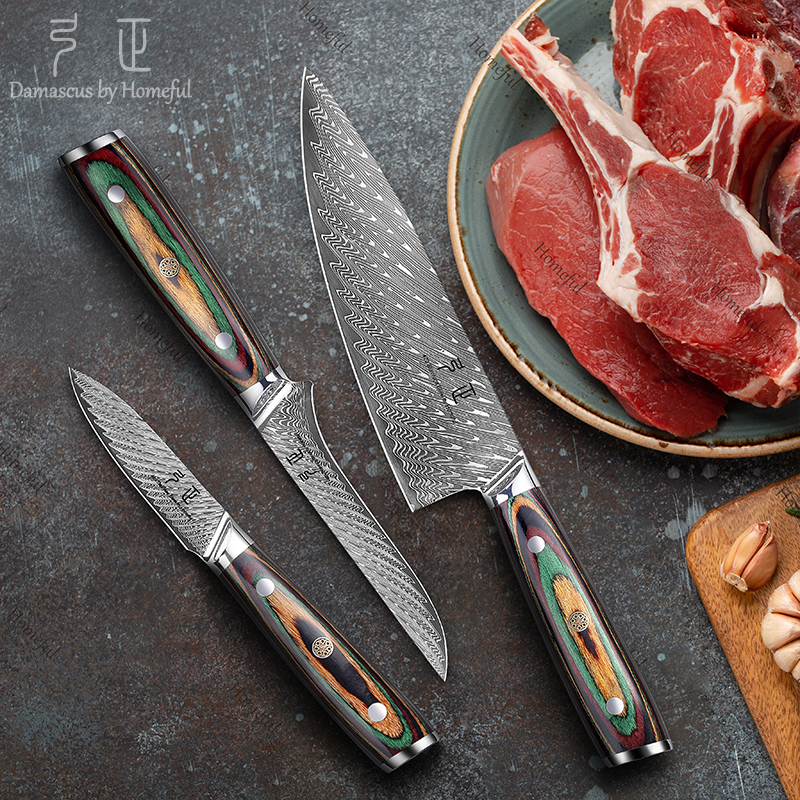
Interest revived in the 19th and 20th centuries, with metallurgists and blacksmiths attempting to unravel its secrets. Modern ‘Damascus’ knives are usually made by pattern-welding, a technique that mimics the layered appearance using stacks of different steel types—heated, twisted, and forged together. While this process doesn’t precisely replicate ancient Damascus, it achieves comparable visual and performance characteristics.
Today’s knives are crafted with advancements in metallurgy, enabling manufacturers to balance aesthetics and functionality for kitchen use. The fusion of science and tradition ensures Damascus steel remains relevant, offering a nod to its legacy while meeting modern needs.
Damascus Steel in Contemporary Kitchen Cutlery
The leap from ancient weaponry to kitchen cutlery occurred as chefs and home cooks started valuing precision and style in their tools. Modern Damascus steel knives are not just functional—they are works of art in everyday cooking.
Advancements in forging allow manufacturers to produce knives with pronounced patterns, sharper edges, and improved balance. The blades are crafted to excel at slicing, dicing, and chopping, often outperforming conventional stainless steel in both sharpness and longevity.
Key features of Damascus kitchen knives include:
- **Sharpness and Edge Retention:** These knives maintain a fine edge, making them a favorite for precision tasks.
- **Unique Patterns:** Every blade showcases intricate designs, with no two knives alike, appealing to chefs who appreciate individuality.
- **Durability:** Multiple steel layers confer exceptional toughness, making Damascus steel knives remarkably resilient for daily kitchen tasks.
It’s this marriage of beauty and performance that places Damascus steel knives at the forefront of modern cutlery.
Debunking Myths: Authenticity and Market Trends
With popularity comes confusion. Many buyers now wonder: Are all Damascus knives genuine? How do you distinguish true Damascus from imitations?
Authentic, ancient Damascus is virtually unobtainable today. Modern ‘Damascus’ knives, while produced using different techniques, deliver similar performance and aesthetics. Pattern-welded Damascus—usually noted for its bold patterns—is the most common and practical variant for kitchen cutlery. Some manufacturers use acid etching to enhance the pattern, creating an appealing look but not always providing the structural benefits of classic pattern-welding.
It’s important to research brands and makers, as some knives market the visual style but lack the layered steel composition that imparts strength.
The market has grown rapidly, appealing to collectors, professional chefs, and enthusiastic home cooks. Knife enthusiasts often seek out custom or artisan-crafted blades, sparking a vibrant collector culture.
Choosing and Caring for Damascus Kitchen Knives
If you’re considering adding a Damascus steel knife to your kitchen, keep these tips in mind:
- **Buying Tips:** Check for genuine, layered construction by reputable makers. Look for knives crafted with high-carbon core and visible pattern-welding.
- **Maintenance:** Although durable, Damascus knives benefit from gentle care. Hand wash and dry immediately to avoid spotting or corrosion. Regular sharpening will maintain the edge.
- **Pros & Cons:** While Damascus knives offer superior sharpness and beauty, they may require more maintenance than stainless steel. Their value as culinary art and craftsmanship, however, outweighs these considerations for most enthusiasts.
Conclusion
Damascus steel’s journey from ancient battlefields to contemporary kitchens is a testament to enduring craftsmanship and innovation. Today’s Damascus steel knives blend the mystique of tradition with state-of-the-art metallurgy, earning their place as both a chef’s tool and an object of beauty.
Whether you’re a collector, a professional chef, or simply someone who loves cooking, Damascus steel knives invite you to embrace history in your kitchen. By understanding their origins, appreciating their craftsmanship, and caring for your knife, you carry forward a legacy that’s as fascinating as it is functional.
So, next time you slice, dice, or chop with your Damascus steel knife, remember: you’re wielding a piece of history—a perfect blend of artistry and performance forged over centuries.