
Damascus Knife Vs German Knife: Which Kitchen Knife Is Better For You?
When choosing a high-quality kitchen knife, many home cooks and professional chefs often compare Damascus knives vs German knives. Both knife styles are known for excellent craftsmanship, durability, and cutting performance, but they are designed with different priorities.
A Damascus knife focuses on premium materials, unique blade patterns, sharpness, and craftsmanship, while a German knife is famous for its robust construction, comfortable handling, and long-lasting performance.
So, which one is the better choice for your kitchen? In this guide, we will compare Damascus steel knives and German kitchen knives from materials, sharpness, durability, maintenance, design, and overall value.
What Is A Damascus Knife?
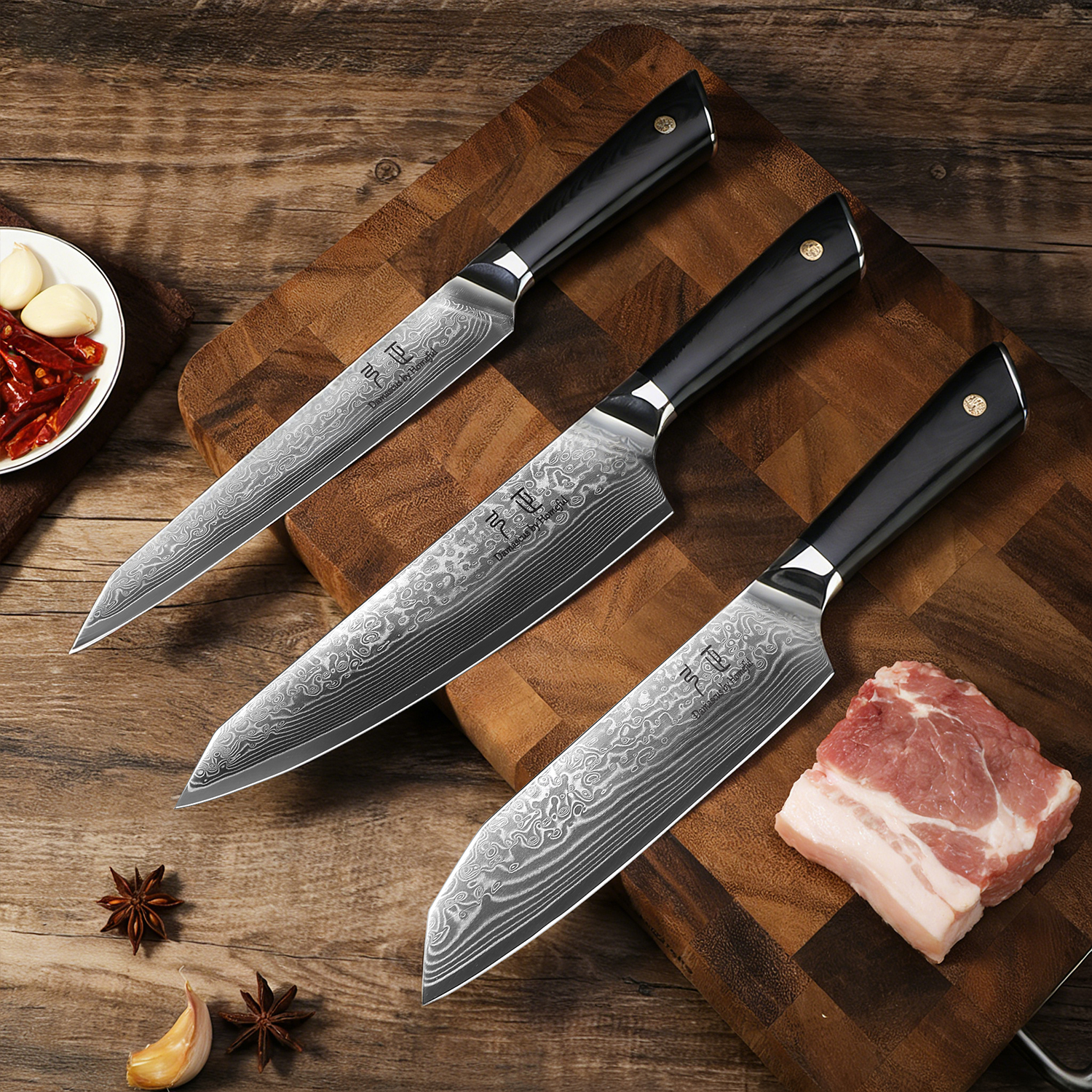
A Damascus knife is a premium kitchen knife made using layered steel technology. Traditional Damascus steel combines multiple layers of steel through forging, creating a distinctive wave-like pattern on the blade surface.
Modern Damascus kitchen knives usually feature a high-performance steel core surrounded by multiple layers of stainless Damascus steel. Common cores include VG10 steel, AUS-10V steel, and 10Cr15CoMoV steel, which provide excellent hardness, edge retention, and corrosion resistance.
A high-quality Damascus chef knife typically offers:
- Beautiful Damascus wave pattern design
- Excellent sharpness and edge retention
- High hardness around 60-62 HRC
- Strong corrosion resistance
- Premium handcrafted appearance
Because of its combination of performance and aesthetics, Damascus knives are popular among professional chefs, home cooking enthusiasts, and premium kitchenware collectors.
What Is A German Knife?
German knives are one of the most recognized styles of kitchen knives worldwide. Famous for their durability and practicality, German-style knives are commonly made from high-carbon stainless steel.
Brands from Germany are known for producing reliable chef knives designed for everyday cooking tasks. German knives usually have a thicker blade, heavier weight, and a full bolster design, making them extremely durable and comfortable for long cooking sessions.
Key features of German knives include:
- Strong and durable blade construction
- Comfortable ergonomic handles
- Excellent balance and control
- Easy maintenance
- Suitable for heavy kitchen tasks
German knives are often preferred by chefs who need a reliable tool for chopping vegetables, cutting meat, and daily food preparation.
Damascus Knife Vs German Knife: Key Differences
1. Blade Material Comparison
The biggest difference between Damascus knives and German knives is the steel construction.
Damascus Knife
Damascus knives use layered steel technology. Many premium Damascus knives feature a hard steel core with protective Damascus layers.
Advantages:
✔ Higher hardness
✔ Better edge retention
✔ Unique blade appearance
✔ Premium craftsmanship
A Damascus steel knife with a 60-62 HRC hardness rating can maintain sharpness longer compared with many traditional stainless steel knives.
German Knife
German knives usually use high-carbon stainless steel with a focus on toughness and durability.
Advantages:
✔ Strong impact resistance
✔ Less likely to chip
✔ Suitable for heavy cutting tasks
✔ Easy to sharpen
Winner: Damascus Knife for sharpness and edge retention / German Knife for toughness
2. Sharpness And Cutting Performance
A sharp knife makes cooking faster, safer, and more enjoyable.
Damascus knives typically have thinner blades and sharper edges, allowing smooth slicing through meat, fish, fruits, and vegetables.
German knives usually have thicker blades, which provide more strength but may require slightly more effort for precise slicing.
For tasks like:
- Slicing steak
- Cutting sushi ingredients
- Preparing vegetables
- Precision kitchen work
A Damascus chef knife often provides a more refined cutting experience.
Winner: Damascus Knife
3. Durability And Maintenance
Both knife types can last for many years with proper care.
Damascus Knife Maintenance
To protect the Damascus blade:
- Hand wash after use
- Dry immediately
- Avoid dishwasher cleaning
- Regularly sharpen with proper tools
German Knife Maintenance
German knives are generally easier to maintain because they are designed for everyday professional kitchen use.
They can handle:
- Heavy chopping
- Frequent use
- More demanding kitchen environments
Winner: German Knife for easier maintenance
4. Design And Appearance
One of the biggest reasons people love Damascus knives is their appearance.
Each Damascus blade features a unique flowing pattern created during the forging process. Combined with premium handles such as:
- Natural wood handles
- Resin handles
- G10 handles
- Luxury gift packaging
Damascus knives are often considered both a kitchen tool and a work of art.
German knives usually focus more on functionality and traditional professional design.
Winner: Damascus Knife
5. Price And Value
Damascus knives are usually positioned as premium kitchen knives because of:
- Complex manufacturing process
- Multi-layer steel construction
- Hand finishing
- Luxury appearance
German knives often provide excellent value for everyday cooking and professional kitchens.
The better choice depends on your needs:
Choose a Damascus knife if you want:
✔ Premium kitchen experience
✔ Long-lasting sharpness
✔ Beautiful design
✔ A luxury cooking tool
Choose a German knife if you want:
✔ A reliable daily workhorse
✔ Easy maintenance
✔ Strong durability
✔ Professional kitchen performance
Damascus Knife Vs German Knife Comparison Table
| Feature | Damascus Knife | German Knife |
|---|---|---|
| Blade Material | Layered Damascus Steel | High Carbon Stainless Steel |
| Hardness | Usually 60-62 HRC | Around 56-58 HRC |
| Sharpness | Excellent | Very Good |
| Edge Retention | Longer lasting | Good |
| Blade Design | Unique Damascus Pattern | Classic Professional Style |
| Weight | Usually lighter | Usually heavier |
| Maintenance | Requires more care | Easier maintenance |
| Best For | Precision cutting & premium kitchens | Everyday cooking |
Which Knife Should You Choose?
There is no absolute winner between a Damascus knife and a German knife. The best choice depends on your cooking style.
If you are looking for a premium chef knife with outstanding sharpness, beautiful design, and excellent performance, a Damascus steel knife is an excellent choice.
If you need a strong, durable kitchen knife for everyday heavy use, a German knife may better match your needs.
For many modern home cooks and professional chefs, a Damascus kitchen knife offers the perfect balance between performance, craftsmanship, and style.
Final Thoughts
Both Damascus knives and German knives represent excellent knife-making traditions. German knives are trusted for their durability and practicality, while Damascus knives stand out with advanced steel technology, exceptional sharpness, and artistic blade patterns.
For cooks who appreciate premium craftsmanship and want a knife that performs beautifully while adding elegance to the kitchen, a Damascus chef knife is a perfect investment.
Explore our collection of premium Damascus Kitchen Knives designed for professional chefs, home cooks, and kitchen enthusiasts worldwide.